DominionSections
Browse Articles
- IndependentMedia.ca
- MostlyWater.org
- Seven Oaks
- BASICS Newsletter
- Siafu
- Briarpatch Magazine
- The Leveller
- Groundwire
- Redwire Magazine
- Canadian Dimension
- CKDU News Collective
- Common Ground
- Shunpiking Magazine
- The Real News
- Our Times
- À babord !
- Blackfly Magazine
- Guerilla News Network
- The Other Side
- The Sunday Independent
- Vive le Canada
- Elements
- ACTivist Magazine
- The Tyee
- TML Daily
- New Socialist
- Relay (Socialist Project)
- Socialist Worker
- Socialist Action
- Rabble.ca
- Straight Goods
- Alternatives Journal
- This Magazine
- Dialogue Magazine
- Orato
- Rebel Youth
- NB Media Co-op
Radio
UN Recommends Reparations for Africville Residents
March 16, 2004
UN Recommends Reparations for Africville Residents
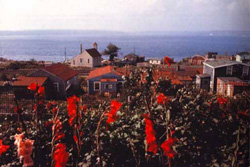
Before: Africville circa 1984; the community was denied basic sanitation and water services by the city of Halifax.
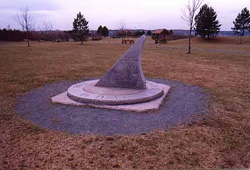
After: Years after the village was demolished and the land appropriated by the city of Halifax, the only remnant of Africville is a small monument.
Located in north Halifax, Africville was home to about 400 black Nova Scotians until it was razed by the city starting in 1964.
First a settlement for black Americans who fled the United States during the war of 1812, Africville existed as a community starting in the 1850s. Though the residents paid taxes, the city of Halifax provided no services, and residents were left to make do with what was available. This set the stage for the city's relocation program in 1964, which was initiated on the basis of the alleged poor sanitation in Africville. Most families were paid around $500 in compensation.
Many historians cite evidence that the city used the humanitarian justification as an excuse to appropriate what was then seen as an ideal area for industrial development. Africville residents were not consulted in the formulation of the relocation program. Despite the trying conditions, many surviving Africville residents have recalled the community with some fondness, citing the strong community and independence.
Efforts by the Africville Genealogy Society to gain compensation for the families of Africville residents have, to date, not been fruitful.
Additional Reading:
» Radio Canada: Africville: expropriation des Noirs néo-écossais
» Photographs: Africville Before and After
» HWP: Africville: Urban Removal in Canada
» CBC: Africville – The Lost Town
» Chronicle-Herald: UN draft report suggests Africville compensation
» Denise Allen: Lessons from Africville
» Isaac Saney: On Reparations
» Rocky Jones: The case for reparations
Related articles:
By the same author:
Archived Site
The Dominion is a monthly paper published by an incipient network of independent journalists in Canada. It aims to provide accurate, critical coverage that is accountable to its readers and the subjects it tackles. Taking its name from Canada's official status as both a colony and a colonial force, the Dominion examines politics, culture and daily life with a view to understanding the exercise of power.